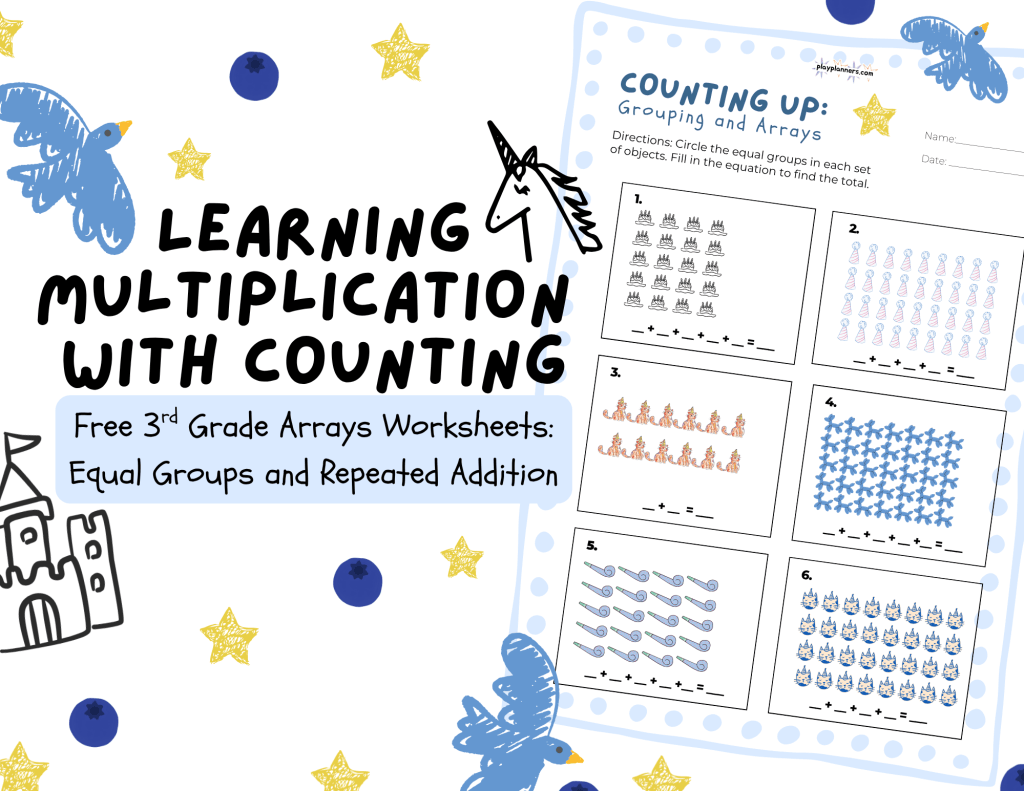
Looking for a fun way to help kids practice arrays and repeated addition? These free 3rd grade arrays worksheets give students a hands-on way to explore equal groups and understand how repeated addition connects to multiplication.
Pin this for later!
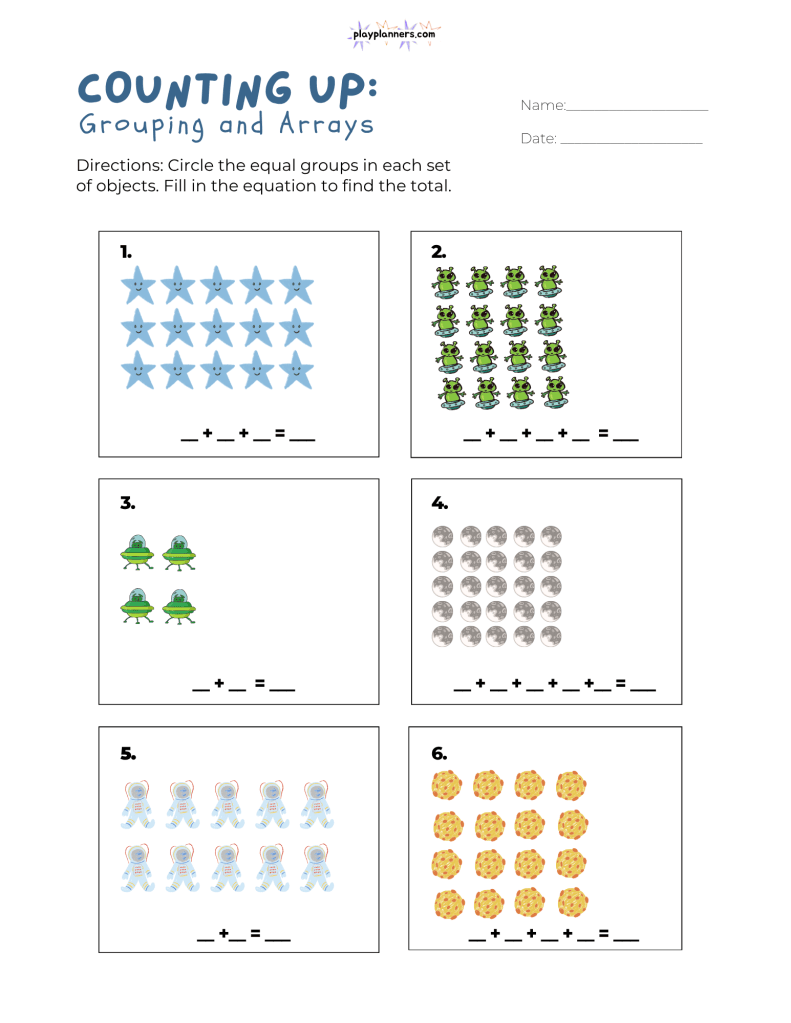
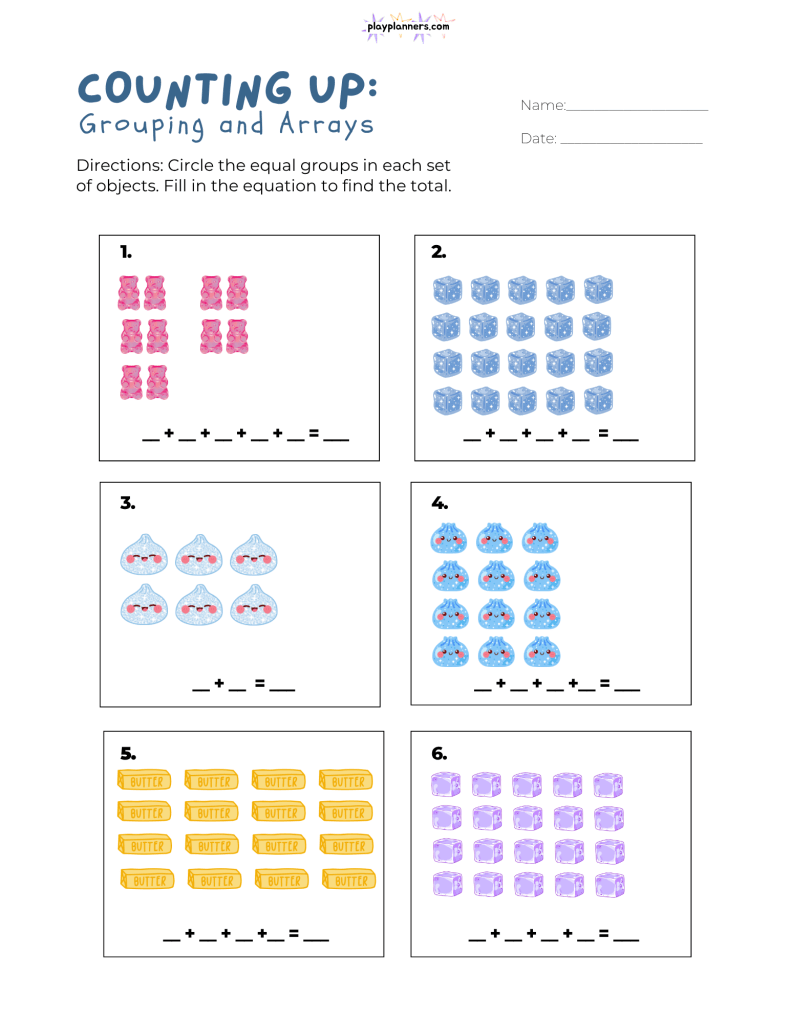
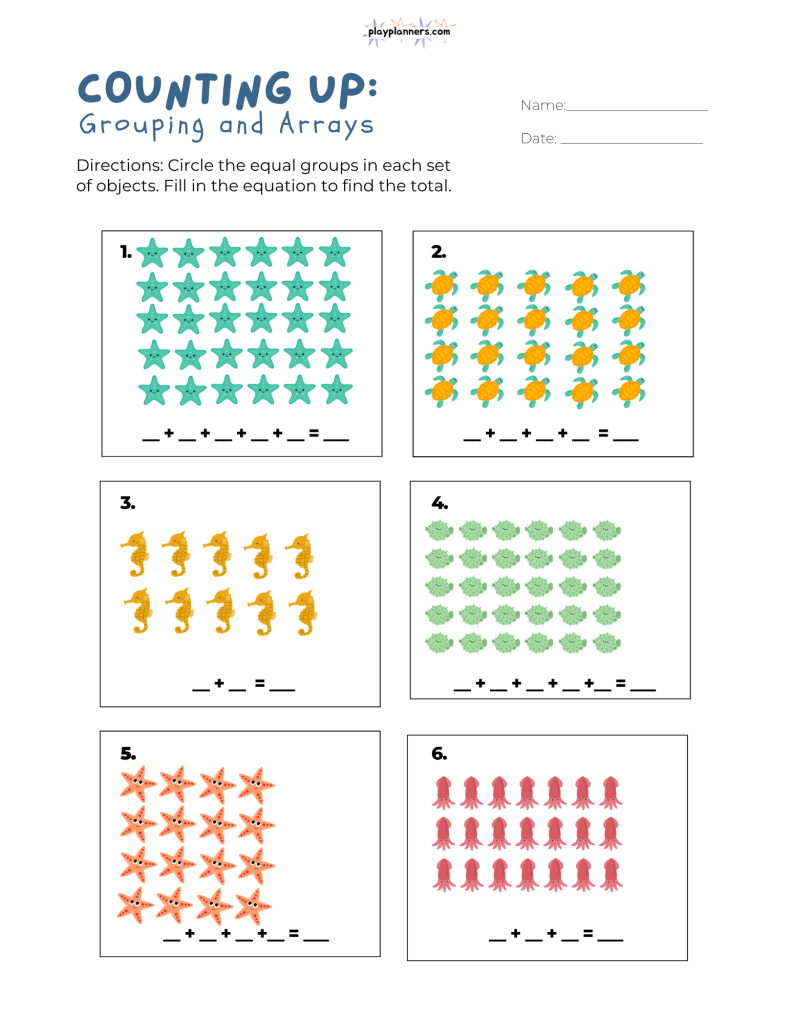
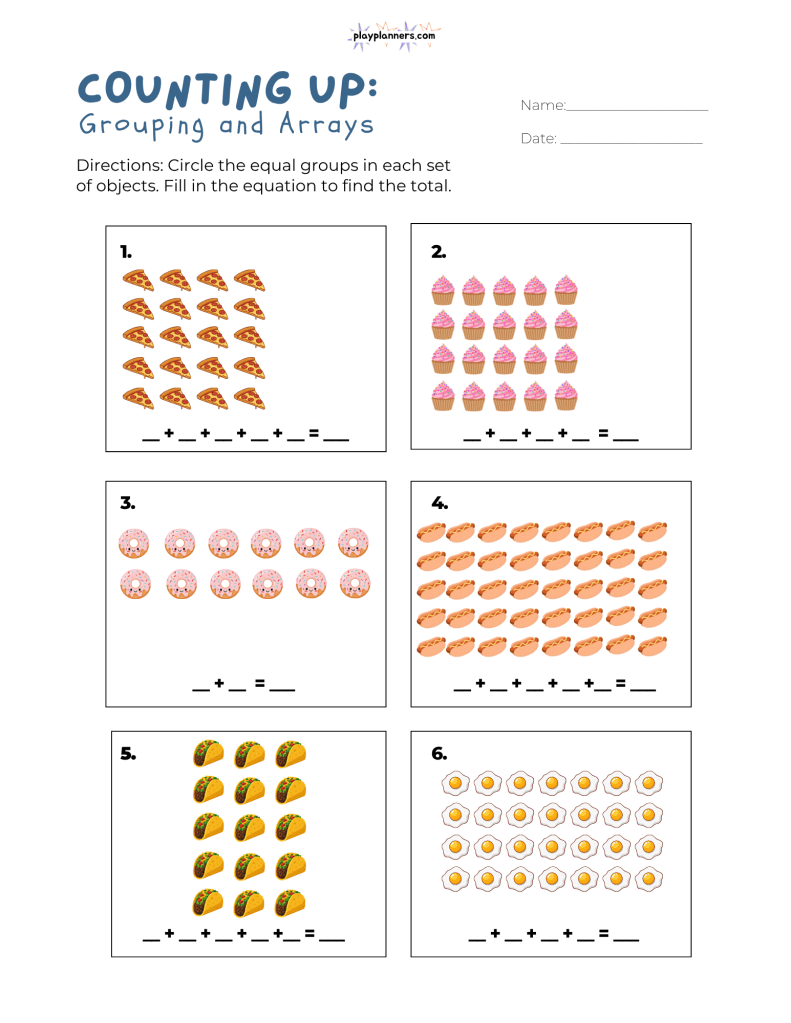
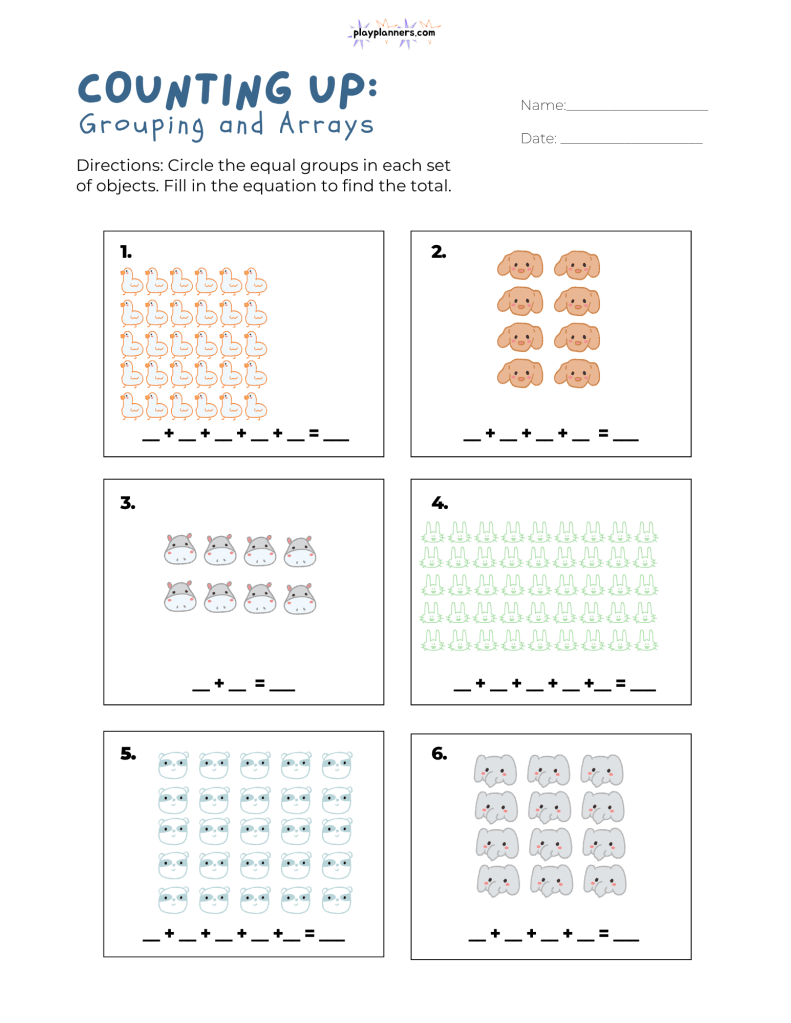
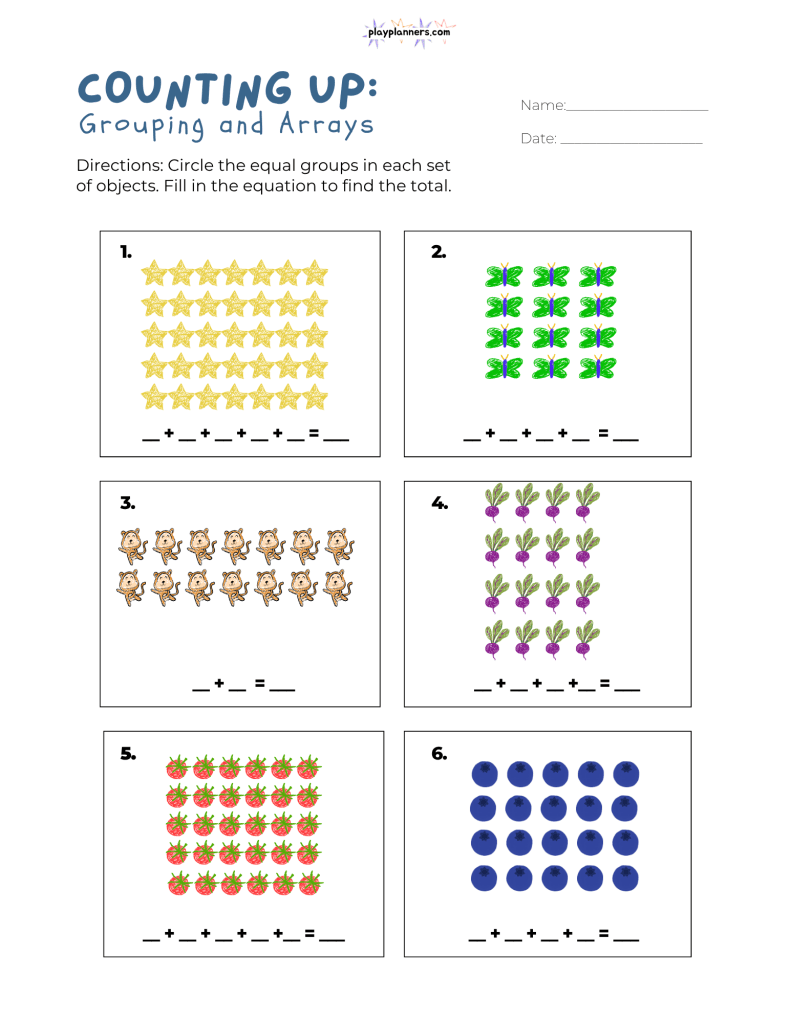
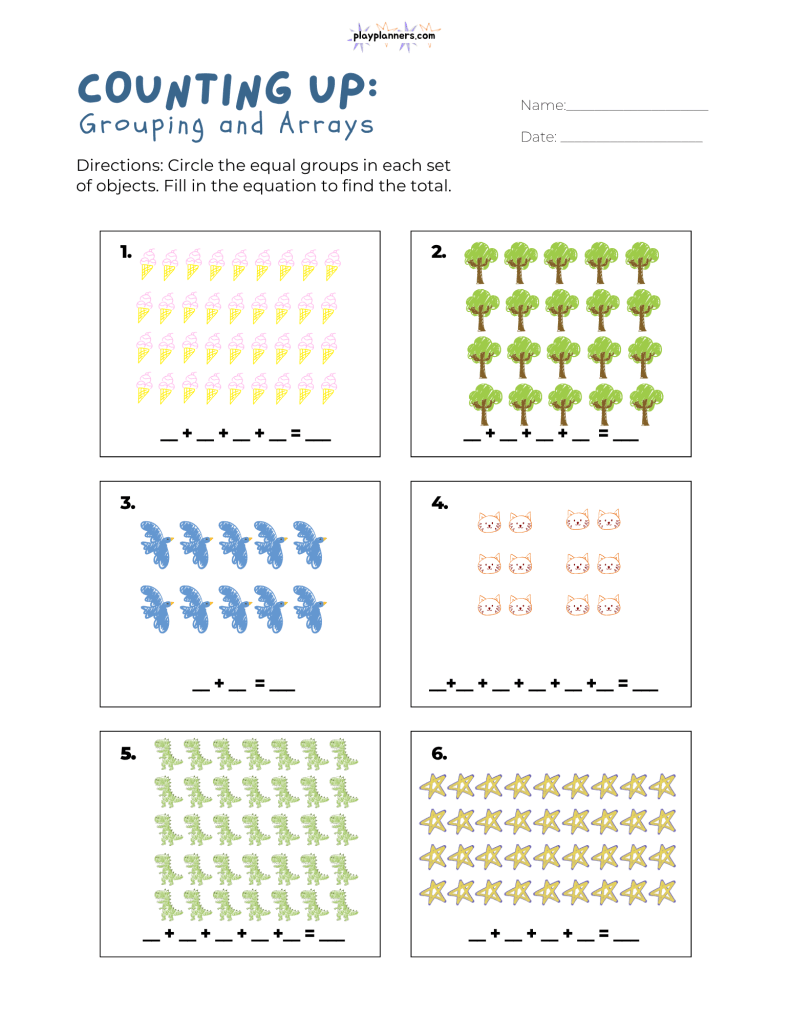
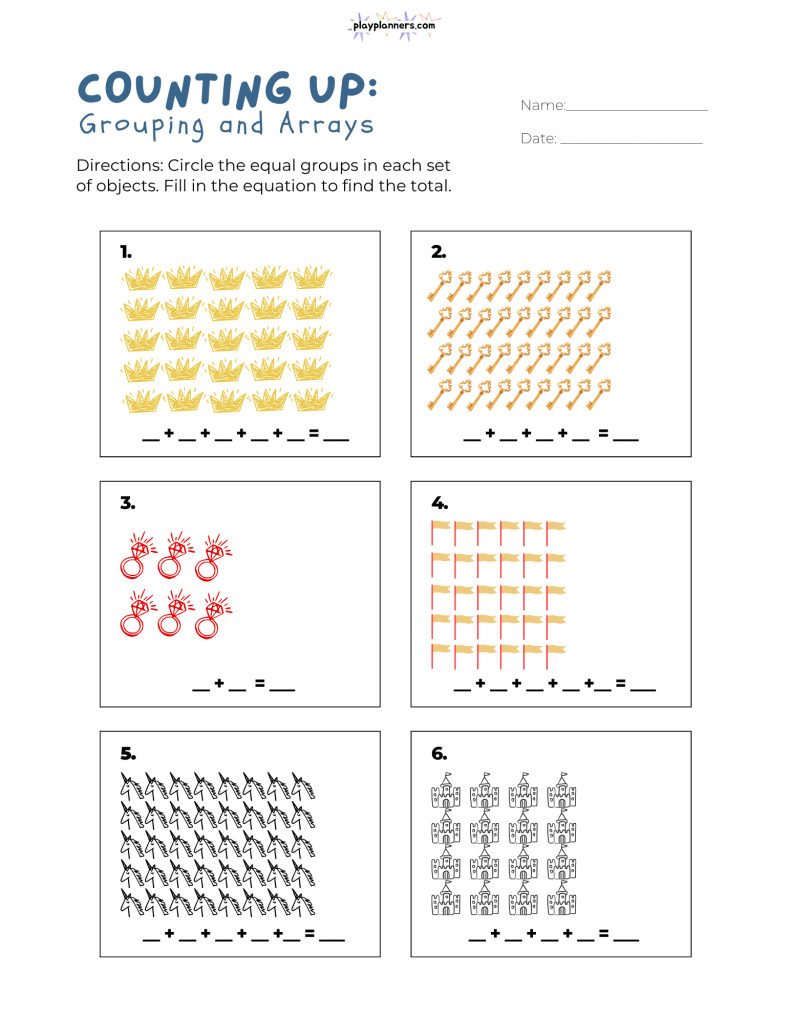
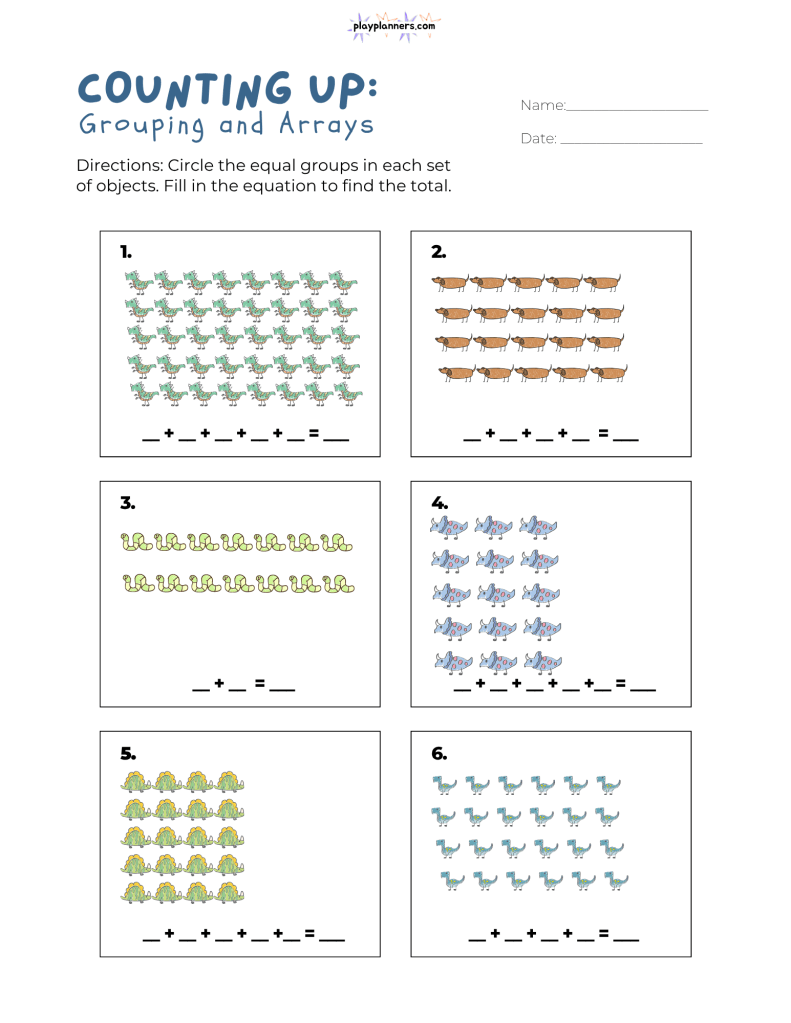
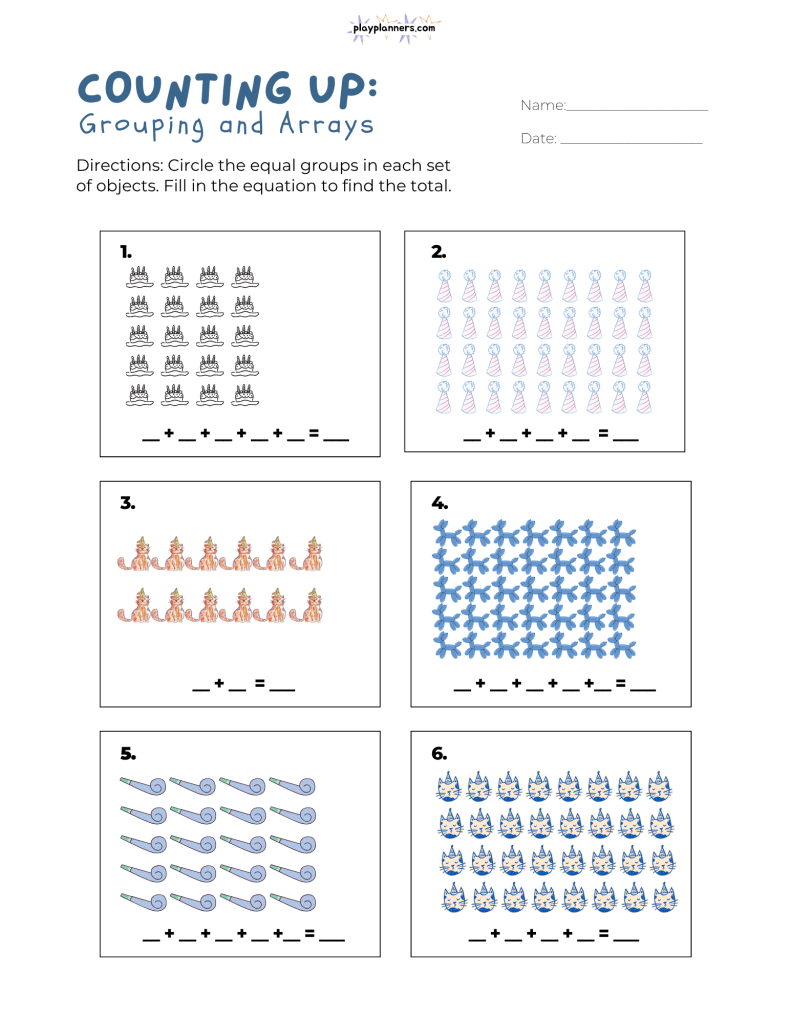
This printable set includes 10 themed math worksheets with 6 problems on each page, giving students 60 problems to practice. Each problem features a picture of equal groups, and students circle the groups, write a repeated addition equation, and find the total.
With themes ranging from dinosaurs and ocean animals to birthday celebrations and squishy toys, these worksheets make math practice more engaging while helping kids build important multiplication skills.
Whether you’re an elementary teacher planning a math lesson, a homeschool parent looking for extra practice, or a babysitter helping a child review math after school, these free printables are ready to use!
Free Printable 3rd Grade Math Worksheets
These equal groups worksheets help students understand how arrays represent repeated addition. Instead of simply memorizing multiplication facts, children can look at a picture, identify the equal groups, and work out the total by adding the same number repeatedly.
Here’s what you’ll get in this free printable set:
- 10 free printable third grade math worksheets
- 6 problems per worksheet
- 60 total practice problems
- Picture-based arrays showing equal groups
- Repeated addition equations for students to complete
- Space to find and write the total
- A name line and date line on every worksheet
- Short, clear directions on each page
- 10 fun themes to keep math practice interesting
Every worksheet is free to print, so you can choose the pages that fit your lesson, your child’s interests, or your daily practice routine.
What Skills Do These Arrays Worksheets Practice?
Arrays are an important visual tool for understanding multiplication. They show objects arranged in equal groups, helping students see how repeated addition can represent the total number of objects.
These third grade math worksheets give students practice with several connected skills.
Identifying equal groups: Students look at a picture and recognize groups that contain the same number of objects.
Understanding arrays: Children explore how objects can be arranged in rows or groups to represent a math problem.
Writing repeated addition equations: Students translate the picture into an equation by adding the same number repeatedly.
Finding the total: After writing the equation, students calculate how many objects there are altogether.
Building a foundation for multiplication: Repeated addition helps students connect equal groups to multiplication equations. For example, three groups of four can be written as 4 + 4 + 4 = 12 and later represented as 3 × 4 = 12.
These skills help children move from counting individual objects toward recognizing groups and understanding multiplication.
How Do Arrays Connect to 3rd Grade Multiplication?
Third grade is an important time for students to strengthen their understanding of multiplication and division. Arrays and equal groups help make these concepts more concrete.
For example, imagine a picture showing four groups of three stars. A student can count three stars in each group and write:
3 + 3 + 3 + 3 = 12
The repeated addition equation shows that the same number is being added four times. Students can then connect the equation to multiplication:
4 × 3 = 12
This visual approach helps children understand what multiplication represents rather than treating it as a collection of facts to memorize.
These worksheets focus on identifying equal groups, writing repeated addition equations, and finding totals. They are useful for introducing the concept, reinforcing a lesson, or reviewing the relationship between arrays and multiplication.
10 Fun Themes for Array and Repeated Addition Practice
One of the best things about this printable set is the variety of pictures. Different themes give students a fresh way to practice the same essential math skills.
The collection includes these 10 themes:
- Birthday: A celebratory theme for kids who enjoy birthday activities.
- Kingdom: A playful kingdom-inspired worksheet.
- Food: Pictures of food to make equal groups easy to visualize.
- Animals: Animal-themed arrays for young animal lovers.
- Dinosaurs: Dinosaur pictures for kids who love prehistoric creatures.
- Ocean: An underwater theme for students who enjoy sea life.
- Squishy Toys: A fun option for kids who love squishies and sensory toys.
- Space: Space-inspired pictures for aspiring astronauts and planet enthusiasts.
- Nature: Monkeys, fruit, bees, and butterflies.
- Outdoor: Birds, trees, ice cream, stars, and cats.
The themes make it easy to offer some variety without changing the math skill being practiced. You can let children choose their favorite page or rotate through different themes during the week.
For a child who loves dinosaurs, start with the dinosaur worksheet. For a student who enjoys space or squishy toys, choose one of those pages instead. A familiar or favorite theme can make a routine math assignment feel a little more inviting.
What’s Included on Each Worksheet?
Every worksheet is designed to be simple to print and easy to use.
Each page includes:
- A name and date line
- A short set of directions
- Six picture-based problems
- Equal groups or arrays for students to examine
- Space to circle the equal groups
- Space to complete a repeated addition equation
- Space to calculate and write the total
With six problems per page, the worksheets provide focused practice without requiring students to complete a large number of questions on a single sheet.
The complete set includes 10 worksheets and 60 problems. You can print the entire collection or choose individual pages based on the theme or skill you want to reinforce.
How to Use These Free Arrays Worksheets
These printable third grade math worksheets work well in a variety of learning environments.
Classwork: Use a worksheet after introducing equal groups or arrays during a math lesson. Students can practice identifying groups and writing equations independently.
Homework: Send a page home to reinforce classroom learning. The pictures and short directions help students revisit the concept outside of school.
Math warm-ups: Use a worksheet as a quick activity at the beginning of math time. Students can review repeated addition before moving on to multiplication.
Math centers: Place several themed worksheets at a math station. Students can choose a page, complete the problems, and practice at their own pace.
Homeschool lessons: Add the worksheets to your third grade math curriculum as supplemental practice. Choose a theme your child enjoys to make the activity more appealing.
After-school practice with a babysitter: If you’re a babysitter helping a child review schoolwork, these worksheets offer a ready-to-use activity. Print a page, read the directions together, and help the child work through the arrays and equations.
Extra practice: If a child needs more time understanding equal groups, use the worksheets for additional repetition before moving on to more advanced multiplication practice.
Tips for Teaching Arrays and Repeated Addition
If your student is still learning how arrays work, a few simple activities can make the concept easier to understand.
1. Build an array with small objects
Gather counters, blocks, buttons, toy animals, or other small objects. Ask the child to create equal groups, such as three groups of four objects.
Have the student count the objects in each group and then count how many there are altogether.
2. Draw the groups before writing the equation
Before completing a worksheet problem, let the child draw circles around the groups or recreate the picture on scrap paper. This gives the student an opportunity to see how the groups are organized.
Then ask how many objects are in each group and how many groups there are.
3. Say the repeated addition equation aloud
For three groups of four, say, “Four plus four plus four equals twelve.”
Have the child point to each group as they say each number. This connects the objects in the picture to the numbers in the equation.
4. Connect repeated addition to multiplication
Once the student understands the repeated addition equation, introduce the matching multiplication equation.
For example:
4 + 4 + 4 = 12
3 × 4 = 12
Explain that multiplication is a shorter way to represent equal groups. Students can gradually become more comfortable moving between pictures, addition equations, and multiplication equations.
5. Let kids choose their favorite theme
Offer a choice between two or three worksheet themes. A student who loves animals might prefer the animal page, while another might be more excited about dinosaurs or space.
The math stays focused on the same skill, but the choice adds variety to practice.
How to Download and Print the Worksheets
Getting started is simple!
- Click the download link below to access the free arrays worksheets.
- Choose the worksheet pages you want to use.
- Print the pages on standard printer paper.
- Give each student a pencil and let them work through the six problems on each page.
You can print one worksheet for a quick review or use several pages throughout the week. Keep the remaining printables handy for future math lessons, homework, or extra practice.
Ready to practice arrays and repeated addition?
These worksheets are free to print and use for classroom instruction, homeschool lessons, and extra practice at home.
Frequently Asked Questions
What grade are these arrays worksheets for?
These worksheets are designed for third grade students practicing equal groups, arrays, repeated addition, and the connection between repeated addition and multiplication.
How many worksheets are included?
The set includes 10 printable worksheets with six problems per page, for a total of 60 problems.
What does a student do on each problem?
Students look at a picture of equal groups, circle the groups, complete the repeated addition equation, and find the total.
Are these worksheets free?
Yes! All 10 worksheets are free to print.
Can I use these worksheets for homeschool or classroom math?
Absolutely. They work well for classwork, homework, warm-ups, math centers, homeschool lessons, and additional practice.
Can a babysitter use these worksheets for after-school practice?
Yes! The worksheets are a convenient option for a babysitter who wants to help a child review math skills after school. Simply print a page and work through the directions and problems together.
Why practice repeated addition before multiplication?
Repeated addition helps students understand that multiplication represents equal groups. Seeing the groups and writing the addition equation helps connect the visual model to the multiplication concept.
Keep Building Math Skills with Play Planners
Arrays and repeated addition are useful stepping stones toward multiplication. With 10 themed worksheets and 60 total problems, this free printable collection gives third graders opportunities to practice identifying equal groups, writing equations, and finding totals.
Choose a favorite theme, print a worksheet, and help your student build confidence with the building blocks of multiplication!
Explore more free printable math worksheets and learning activities at Play Planners for additional ways to make learning fun.
Looking for more free printable worksheets?
Add If You Dare: Free Halloween Addition Worksheets for 3rd Grade
Looking for free Halloween addition worksheets for 3rd grade? Get ready for some spooky math practice with Add If You Dare! These 10 free printable Halloween addition worksheets feature stacked vertical addition problems with varied numbers, giving third graders more opportunities to practice their addition skills. Pin this for later! This Halloween-themed set is pages…

Free Space Themed 3rd Grade Addition Worksheets (10 Printables)
Looking for free 3rd grade addition worksheets with a fun outer space theme? These 10 free printable space themed addition worksheets help students practice stacked vertical addition while enjoying a little out-of-this-world fun! Pin this for later! Each worksheet includes 16 vertical addition problems, with numbers lined up by place value to help students keep…



Leave a Reply