Free Printable Cutting Practice Worksheets for Preschool, Pre-K & Kindergarten
Pin this post for later!
Help your little learners build confidence with scissors using these free printable cutting practice worksheets! Designed for preschool, Pre-K, and kindergarten, these pages help children strengthen fine motor skills while practicing straight, curved, zigzag, and wavy lines.
Whether you’re a parent, teacher, homeschool family, or babysitter, these printable worksheets make learning fun and easy.
What’s Included
This free printable pack features a variety of cutting activities, including:
- Straight lines
- Curved lines
- Zigzag lines
- Wavy lines
- Simple shapes
- Beginner-friendly cutting practice
Each page is designed to help children improve their scissor skills one step at a time.
Why Cutting Practice Is Important
Learning to use scissors helps children develop:
- Fine motor skills
- Hand-eye coordination
- Bilateral coordination
- Pencil control
- Focus and confidence
These are important skills that support handwriting and other early learning activities.
Perfect For
These cutting practice worksheets are great for:
- Preschool
- Pre-K
- Kindergarten
- Homeschool
- Classrooms
- Daycare
- Babysitters
- Occupational therapy activities
Download Your Free Cutting Practice Worksheets
Click the download button below to get your free printable cutting practice worksheets and start building scissor skills today!
⬇️ Download the Free Printable Here
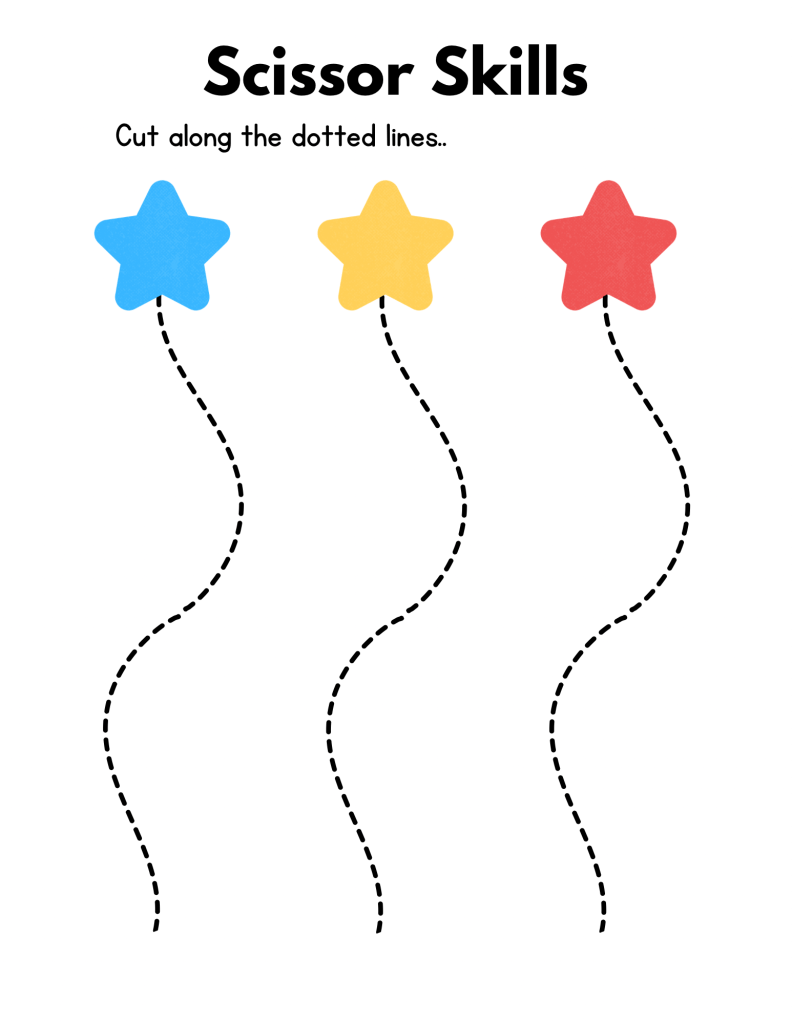
The image above shows just one page from the printable packet. When you download the free PDF, you’ll receive all 8 cutting practice worksheets with a variety of fun lines and shapes to help preschool, Pre-K, and kindergarten children build their scissor skills.
Looking for more ideas?
Posts

How to Use These Cutting Worksheets
The pages are ordered on purpose. Straight lines come first because they only ask a child to open and close the scissors in a rhythm. Curves, zigzags and waves each add a new demand, and the shapes at the end pull all of it together. Working through them in order tends to go better than letting a child pick the fun-looking page first.
Setting up for success
- Check the grip. Thumb on top, pointing at the ceiling. If the thumb rolls sideways the cut goes sideways with it.
- The helper hand turns the paper, not the scissors. This is the single hardest thing for a new cutter, and the curved pages are where it clicks.
- Keep sessions short. Five or ten minutes is plenty at this age. Little hands fatigue quickly, and a tired grip builds sloppy habits.
- Use real safety scissors. Blunt-tip scissors that actually cut are far less frustrating than novelty ones that fold the paper instead.
If a child is struggling
Snipping is the step before cutting a line. Hand over a strip of paper about an inch wide and let them make single snips along the edge with no line to follow at all. It builds the open-and-close motion without the pressure of staying on track, and most children are ready for the straight-line page within a few sessions.
For a left-handed child, turn the page around rather than the scissors. Left-handed scissors help, but rotating the paper so they cut away from their body solves most of the problem on its own.
Getting more out of one printing
Laminating a page and using a dry-erase marker will not work here, since the point is cutting. Instead, print the straight-line and curve pages twice. Children rarely master a curve on the first attempt, and having a second copy ready means the practice continues while their interest is still there.
The cut strips are worth keeping too. Zigzag and wavy pieces glue neatly into a collage, which turns a fine-motor exercise into an art activity and gives a child something finished to show for the effort.





 Play Planners
Leave a comment